



|
Getting your Trinity Audio player ready...
|
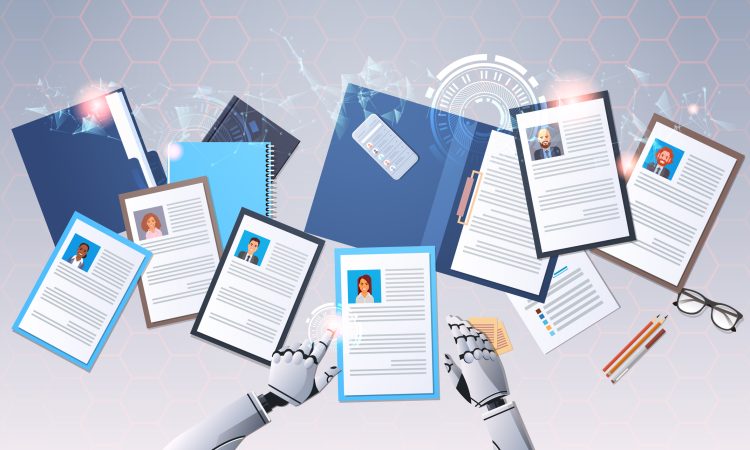
The labour market is shifting faster than at any point in recent memory. Economic disruption and rapid technological change are reshaping how Canadians find work and how employers hire. For career practitioners, this creates a pressing need to understand the impact of artificial intelligence (AI), now widely embedded across recruitment, job-search and career-development tools.
Recent estimates suggest that over half of publicly-traded companies use AI in HR, and it is increasing. Job seekers are embracing it too with 70% now using AI to prepare resumes, practice interviews or research career options.
Canada has built a global reputation as an AI leader. Canadians, however, are cautiously optimistic with strong expectations for transparency, ethics and accountability.
This article is part of a themed CareerWise series highlighting topics gaining momentum at Cannexus26. For more timely insights from across the career and workforce development field, sign up for CareerWise Weekly.
This Canadian context shapes how AI can and should be used in job search and employment.
Have we broken job search?
When I sat down with Ali Hashemi, Thrive Career Wellness’s Head of AI, he described today’s job market as a “cat and mouse game” between employers and job seekers. Both sides are using AI tools but not always effectively or transparently, even as these tools rapidly evolve.
For job seekers, just the perception of getting past automated filters is a challenge. A widely cited statistic suggests that 75% of resumes are rejected by Applicant Tracking Systems (ATS) before a human ever sees them. This has fueled advice about ATS “hacks” and keyword stuffing and automated resume tailoring that result in generic, easily identifiable applications that still fail to stand out.
In practice, the issue is more nuanced. While ATS platforms are used to organize and prioritize applications, a 2025 EnhanCV study estimates that 36% of recruiters use AI scores to triage applications and only 8% auto-reject applications without human review. The main constraint remains sheer volume, where 92% of recruiters say clear, well-structured resumes that can be easily skimmed are essential.
These frictions make job search feel broken for both sides, but it’s less about automation itself and more about clarity, relevance and signal quality in an overcrowded hiring process.
Moving beyond keywords
Part of the problem is that many recruitment systems still rely on rudimentary keyword matching, a major limitation where job titles and terminology vary widely by region, industry or cultural background.
To address this in the AI context, it is critical to use internationally recognized systems for describing occupations, such as Employment and Social Development Canada’s National Occupational Classification (NOC).
These frameworks provide a foundation that enables AI to do deeper, semantic analysis of key artifacts, such as a job seeker’s resume. They allow systems to standardize overlapping job titles and interpret multiple expressions of the same skill for a job posting. This helps the job seeker or career coaches better identify true skill gaps and help match to relevant training or adjacent roles.
This semantic approach can also support fairness. A 2023 study from Toronto Metropolitan University Diversity Institute shows that newcomers disproportionately struggle with credential recognition and international work experience, barriers that semantics-aware AI can help reduce.
Career pathways, not just job matches
AI can support a more comprehensive approach that situates job recommendations within broader career pathways, including:
- Finding relevant roles, beyond simple profile keywords
- Scoring fit across multiple dimensions, such as education, experience and skills
- Mapping occupational and skills adjacencies along with labour market insights
- Providing actionable next steps, including coaching or skills training
This matters in Canada because the labour market is undergoing profound structural change:
- Workers in retail and clerical roles face sectoral decline
- The clean tech, electrification, aerospace, AI and biotech sectors are expanding
- The post-secondary and training system is adapting to evolving workforce needs
- Many workers need help navigating transitions
Leveraging AI in this way, career coaches can advise and support job seekers with a more proactive, data rich career trajectory beyond their next job.
Human-centred AI
Canadian public opinion on AI indicates that people want the benefits of AI-enabled tools, but insist on:
- Strong safeguards
- Clear oversight
- Thoughtful regulation
In this context, AI-enabled recruitment practices should reflect the following expectations and principles.
1. Removing Personally Identifiable Information (PII)
Removing names, one of the strongest proxies for gender and ethnicity, from AI processing, helps reduce bias. This aligns with principles in Canada’s employment equity framework and emerging legislative requirements.
2. Keeping humans-in-the-loop
Research suggests that AI can significantly improve recruitment effectiveness when balanced with human judgement and relational work. Similarly, while AI can help expedite job search, job seekers and career coaches need to remain in control to mitigate for issues like hallucinations.
3. Ethical governance
A principled AI approach helps provide a clear ethical framework to all AI development, emphasizing fairness, privacy, accountability and responsible collaboration. Establishing formal governance isn’t just about compliance, it’s foundational to building AI that is a more effective and trusted.
A better future, if we build it well
This is a challenging time but also one filled with enormous potential. Canada’s leadership in responsible AI, combined with a values-driven approach to labour market transformation, positions us to build tools that genuinely help people navigate change.
For career practitioners, three implications stand out:
- Shift from “beating the system” to improving signal quality for both human and AI-enabled processes
- Act as translators between technology and career decisions, supporting informed consent, realistic expectations and responsible use of AI
- Design programs that emphasis pathways, using AI insights to augment human judgement
Done well, AI systems can expand human potential and help Canadians at every stage of their career faster, with clarity and more choice, not by replacing human insight but by amplifying it.
John Lee works at Thrive Career Wellness, where he focuses on delivering public-sector impact through operational excellence and trusted partnerships. Thrive Career Wellness is the Main Stage Partner at CERIC’s Cannexus26 conference, taking place virtually and in-person in Ottawa from Jan. 26-28. Learn more and register at cannexus.ceric.ca.