




|
Getting your Trinity Audio player ready...
|
Much can be said about the importance of connecting with client. How this is done varies depending on whether you are working with a client one-to-one, working in a group setting or supporting a team. Although the process may change, at its heart, the importance of connection and mattering stays the same. In this post, I will be sharing examples with a focus on one-to-one coaching.
Establishing a connection and agreement on how to work together before starting the work helps career practitioners build a strong foundation in the coach-client relationship. Through this practice, the client has the opportunity to share more about themselves, their identity and what their coach needs to know to best support them. This practice creates the opportunity for partnership in the work being done together. It shifts clients’ mindsets from viewing career coaching as something done to them to a collaborative experience done with them.
The concept of Mattering (Rosenberg & McCullough) is helpful for building connections with clients. When a client feels like they matter, they are more engaged in their coaching sessions and hopeful. Mattering can take place through email interactions, a client’s experience walking into a physical office and, of course, during the work you do together. It is often a focus at the beginning of a conversation. Still, it is essential to weave throughout the conversation, from the beginning of a client engagement to the end of your time working together.
This article is part of a themed CareerWise series highlighting topics gaining momentum at Cannexus26. For more timely insights from across the career and workforce development field, sign up for CareerWise Weekly.
There are lots of ways to connect with your client as you begin working together. Here are a few questions you might consider exploring:
- Have you ever worked with a coach or had a positive learning experience? What were the qualities of that experience that you found most helpful that we can bring into the work we do together?
- Thinking about the end, what progress would you like to have made through this work we will be doing together?
- Is there anything you’d like to share with me about who you are?
- What is your experience with coaching? Likely followed by a discussion about what coaching is/isn’t and what to expect when working with you.
Discussing how you work together should also continue throughout a coaching engagement. Being mindful of the agreements you have set out and taking time to check in to see if any adjustments need to be are helpful strategies to ensure you have a strong foundation. When work begins with a client, there are often a few emails exchanged and an introductory call to discuss the work you will be doing together, which naturally leads into your coaching sessions. These are all opportunities to learn about your client and connect with them in meaningful ways.
It shifts clients’ mindsets from viewing career coaching as something done to them to a collaborative experience done with them.
Using the Hope-Action Inventory and Hope-Action Theory’s (Niles, Yoon, Amundson) competencies can be a helpful way to have this initial conversation, and contribute to feelings of Mattering. Each person (client and coach) has their own internal strength and coaching style. Understanding this can help the coach and client explore their working relationship more deeply. Using the competencies as a starting point, you can begin to understand what comes naturally and identify areas that may require more focus. It is also important to recognize the interpersonal dynamics and preferences between the coach and the client as you work together. Here are some examples of how these competencies might show up for the client and the coach.
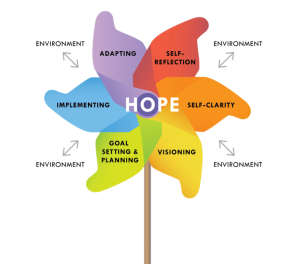
- Self-Reflection: Somebody who enjoys spending time reflecting, thinking deeply about who they are, and what’s most important to them. The client may enjoy having deep conversations, exploring and reflecting on who they are. As a coach, your strength is likely your ability to dive deeply into expansive exploration with your client.
- Self-Clarity: Someone who has a strong interest in understanding and exploring their values, interests, personal style and skills. They want to have a complete picture before moving forward. As a coach, you may find value in summarizing what is being learned, taking notes during a coaching session, and working with your client on systems to track information and develop greater self-awareness.
- Visioning: Somebody who has so many ideas and loves to follow rabbit trails, seeing all of the possibilities to explore. They can view challenges from multiple perspectives, becoming excited about the various options available to them. They may find it challenging to focus on one for a conversation. As a coach, you may be highly curious, able to see many different directions a conversation or idea could take.
- Goal-Setting & Planning: Someone who enjoys breaking things down into steps, teasing apart what needs to be done to develop a strong plan of action. They may prefer to make lists or think through steps in detail to feel well-prepared and comfortable with taking action. As a coach, you may be eager to help your clients make plans and feel a strong desire to do this work for them. Your ability to break down goals into manageable steps will help you support your client in learning and developing this skill.
- Implementing: Someone who is ready to take action! They are eager to begin working together and will be keen to put what they learn into practice. They may want to rush through the reflective parts of coaching to get to the part where they can test ideas and act. As a coach, you may also be tempted to jump ahead to the problem-solving part of coaching. Your ability to put ideas into action will help you support clients as they move from self-reflection to action.
- Adapting: Someone who trusts themselves as they navigate uncertainty. Although change and transition can be uncomfortable, someone who is high in adaptability may be able to acknowledge the discomfort and lean into opportunities for learning or the possible positive outcomes of change. As a coach, you may be able to move with your client in the moment, following the conversation as it shifts.
Each person is unique and often has varying strengths in more than one competency. Hopefully, these examples will help you become curious about who you are, how your strengths work together, and how they also combine with those of the clients you support. Spending time understanding and building up competencies that may be less strong will help increase your impact as a coach and your sense of hopefulness in the process.